I may earn a commission at no extra cost to you. #ad
Top-Rated Zombie Animatronics and Tactical Props for Survivalist Themed Retail
Jump to Section
Why Immersive Theming Matters in Survivalist Retail
In the modern retail landscape, simply stocking shelves with gear isn't enough to capture the attention of a discerning audience. For survivalist-themed stores, the environment itself must act as a narrative tool. When a customer walks into your store, they shouldn't just feel like they are shopping for backpacks or tactical lights; they should feel like they are preparing for the "end of the world."
Integrating high-quality zombie animatronics and authentic tactical props bridges the gap between commerce and experience. This strategy, often referred to as "retailtainment," increases dwell time—the amount of time a customer spends in your store—which is directly correlated with higher conversion rates and larger average transaction values. By creating a visceral atmosphere, you tap into the emotional side of survivalism: the need for readiness, the thrill of the scenario, and the satisfaction of being well-equipped.
Top-Rated Zombie Animatronics for High Traffic
When selecting animatronics for a retail environment, the criteria differ significantly from those of a seasonal haunted house. You need "industrial grade" reliability. Retail displays often run 8 to 12 hours a day, seven days a week. Cheap, plastic-geared seasonal props will fail within weeks under these conditions.
- Pneumatic "Lunger" Figures: These utilize air compressors for rapid, powerful movements. They are incredibly durable and provide a genuine "startle" effect when triggered by a motion sensor near a high-margin display.
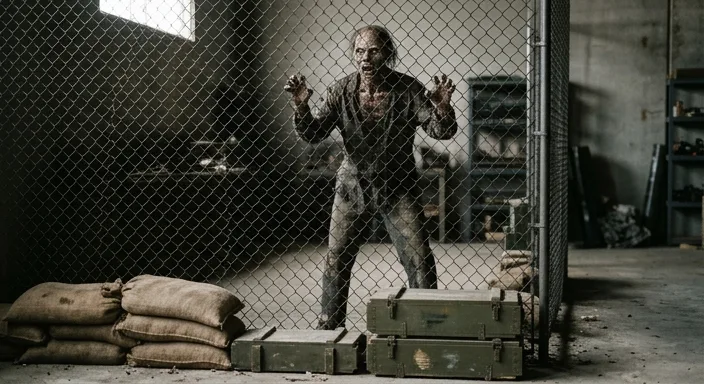
- Electric "Shufflers": These offer more subtle, constant motion. A zombie scratching at a reinforced window or slumped against a "quarantine" barricade adds a layer of persistent tension without requiring the maintenance of an air system.
- Interactive "Talking" Zombies: Modern animatronics can be programmed with custom audio. Imagine a zombie that groans about the specific "anti-infection" spray or tactical gear you are currently promoting.
Look for animatronics with steel frames and high-quality silicone skins. These materials resist fading and are much easier to clean, ensuring your "undead" look professionally terrifying rather than just dusty.
Essential Tactical Props for Environmental Storytelling
Tactical props are the glue that holds your theme together. They provide the context for the animatronics. Without props, a zombie is just a robot; with props, it's a survivor's worst nightmare. For a survivalist retail setting, focus on "heavy" materials—metal, wood, and heavy-duty canvas.
Authentic Barricades: Instead of simple rope barriers, use stacked sandbags or rusted chain-link fencing with "Biohazard" signage. This creates a natural path for customers while reinforcing the theme.
Crates and Storage: Use surplus military ammo cans and weathered wooden crates as product risers. This keeps the merchandise within the world of the "outbreak."
Medical and Prep Gear: Scatter deactivated "EpiPens," spent shell casings (inert), and medical gauze rolls around your zombie displays. These small details encourage customers to stop and look closer, increasing the likelihood they will notice nearby products like first-aid kits or survival sprays.
Strategic Placement and Customer Flow
Placement is everything. You do not want to scare a customer so much that they drop a glass bottle or avoid a specific aisle. The goal is engagement, not genuine terror that leads to avoidance.
Place your most active animatronics in the "Decompression Zone"—the area just past the front door. This immediately sets the mood. However, keep the center of the store (the "Power Aisle") relatively clear of startling triggers to allow for comfortable browsing. Use props to create "zones." For example, a "Safe Zone" display for food and water rations should be brightly lit and clean, while the "Contact Zone" for tactical gear and defense tools can be grittier and feature your animatronics.
Maintenance and Durability for Retail Environments
A broken animatronic is a "theme killer." If a zombie’s arm is hanging by a wire or it’s making a mechanical clicking sound, the immersion is broken. Implement a weekly maintenance schedule:
- Check Sensors: Ensure PIR (Passive Infrared) sensors are clean and positioned to catch traffic without being triggered by shadows or HVAC air movement.
- Lubricate Joints: Use silicone-based lubricants on moving parts to prevent squeaking and wear.
- Update the Look: Periodically change the zombie's clothing or move props around. Regular customers appreciate the "evolving" story of your store.
Frequently Asked Questions
In a retail environment, it is best to use "PG-13" horror. Focus on the survivalist/tactical aspect rather than extreme gore. Using motion sensors with a delay can also prevent children from being caught off guard.
A high-quality pneumatic animatronic can cost between $2,000 and $5,000. However, tactical props can be sourced cheaply from military surplus stores. A balanced budget of $7,500 can usually transform a significant portion of a retail floor.
No. Electric animatronics are "plug and play" and much quieter. Only use pneumatics if you want very fast, aggressive movements that electric motors cannot achieve.