Free Guide: Creating High-Margin Novelty Survival Kits for Themed Entertainment Gift Shops
Jump to Section
In the world of themed entertainment—whether it's a haunted attraction, an escape room, or an immersive zombie experience—the gift shop is often an untapped goldmine. While standard t-shirts and mugs have their place, the highest margins often come from curated novelty survival kits. These kits transform inexpensive, everyday items into high-value souvenirs by wrapping them in a compelling narrative.
The Psychology of Survival Retail
Why do customers gravitate toward survival kits? It’s rarely because they actually expect an apocalypse. Instead, it’s about narrative extension. When a guest leaves your attraction, they want to take a piece of that world with them. A "Zombie Outbreak Survival Tin" serves as a physical token of the adrenaline they just felt.
The perceived value of these kits is driven by curation. A customer might not pay $5 for a generic emergency whistle, but they will happily pay $25 for a "Tactical Bio-Alert Device" that comes in a weathered metal tin with a "Containment Zone" sticker. You are selling the story, not just the hardware.
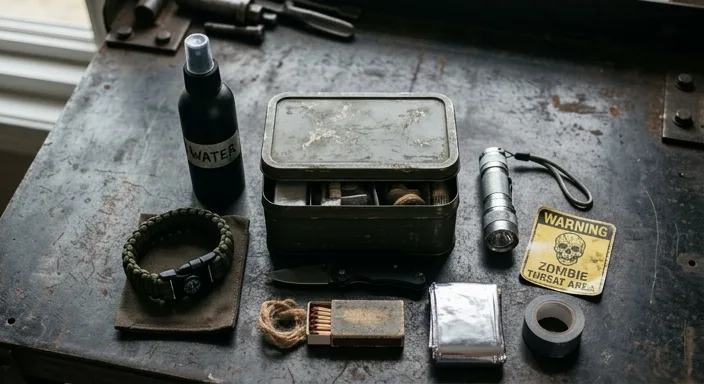
Sourcing Low-Cost, High Perceived Value Items
To achieve high margins, you must source items that look "tactical" but cost very little in bulk. Focus on items that have a high utility-to-weight ratio:
- Paracord Bracelets: Can be sourced for under $0.50 in bulk and retail for $8-$12 as "Emergency Extraction Cords."
- Small LED Flashlights: Aluminum-cased mini lights look high-end but are incredibly inexpensive when bought wholesale.
- Mylar Thermal Blankets: The "space blanket" look fits perfectly into sci-fi or outbreak themes.
- Branded Sprays: Small 1oz spray bottles filled with water/scent (like ZombieSpray) act as the anchor item of the kit.
Packaging: The Aesthetic is the Product
The container is often more important than what’s inside. For survival kits, avoid plastic bags. Use tin containers, canvas pouches, or military-style ammunition boxes. Distressing the packaging—adding fake rust, "Top Secret" stamps, or weathered labels—significantly increases the "cool factor."
Use high-quality vinyl stickers for labeling. A "Restricted Area" warning label on a $1.00 metal box instantly triples its perceived value. Remember, your packaging is what makes the product "giftable."
Pricing Strategies for Maximum Margin
In themed entertainment, you aren't competing with Amazon; you are competing with other entertainment options. Aim for a 3x to 5x markup on novelty kits. If your COGS (Cost of Goods Sold) for a small tin, a whistle, a sticker, and a paracord bracelet is $4.50, your retail price should sit comfortably between $19.99 and $24.99.
Bundle items to hide individual costs. Customers will balk at a $10 keychain, but they won't blink at a $35 "Apocalypse Preparedness Pack" containing five small items.
Creating Themed Kit Variations
Don't just offer one kit. Create a "Good, Better, Best" tiering system:
- The "Rookie" Pack ($15): A small pouch with a sticker, a pin, and a survival card.
- The "Field Agent" Kit ($35): A metal tin with a flashlight, paracord, and a themed spray.
- The "Elite Survivor" Case ($65): A hard-shell plastic case (Pelican-style) with a t-shirt, multi-tool, and a "Certificate of Survival."
Merchandising and Display Hacks
Place your survival kits at the exit point of the attraction. Use industrial shelving, crates, or even sandbags to create a display that looks like a military supply depot. Lighting is key—use cool-toned LEDs or flickering "emergency" lights to draw attention to the retail zone.
Ensure one kit is "unboxed" so customers can touch and feel the components. Tactile engagement is a proven driver for impulse purchases in gift shop environments.
Compliance and Safety Standards
Since these are novelty kits, you must ensure they are safe for the general public. Avoid including sharp blades, real matches, or caustic chemicals if your primary demographic includes children. Always include a disclaimer stating: "For Novelty/Entertainment Purposes Only."
If including a "Zombie Spray" or similar liquid, ensure the ingredients are clearly listed and the container is leak-proof to prevent damage to other merchandise.
Frequently Asked Questions
What is the average profit margin on a novelty survival kit?
Most retailers see margins between 60% and 80%. By sourcing components individually and assembling them in-house, you maximize the "curation premium."
Do I need a special license to sell survival kits?
For novelty kits (non-medical, non-food), standard retail licenses apply. However, if you include food (like "emergency rations"), you may need a health permit depending on your local jurisdiction.
What is the best anchor item for a kit?
A "branded" item that isn't easily found elsewhere, such as a custom-scented spray or a uniquely designed challenge coin, makes the kit feel exclusive to your venue.